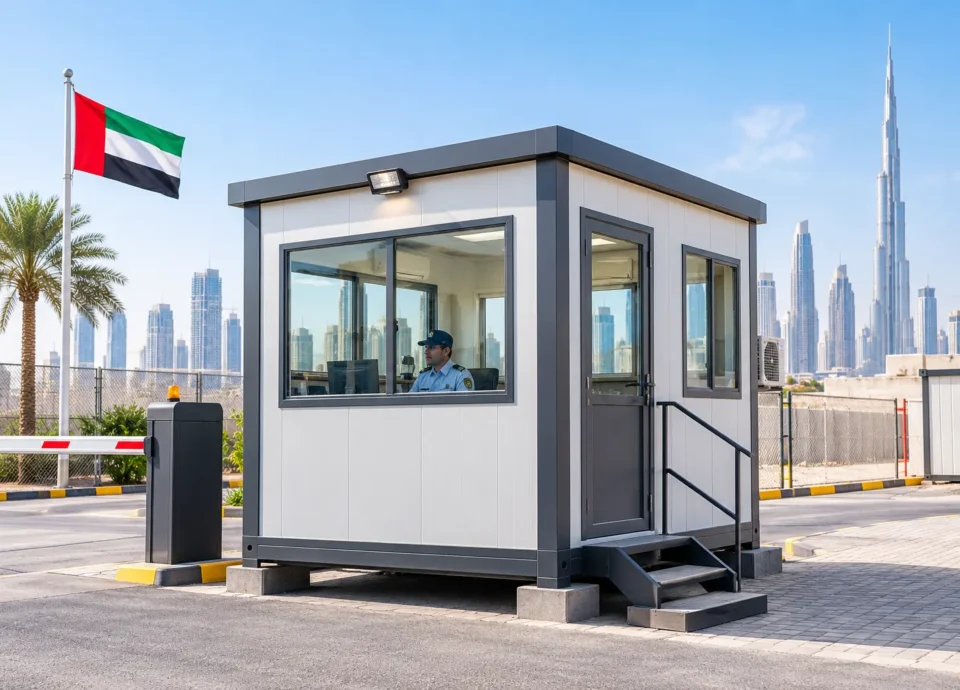
Most people searching for a porta cabin already know the basic question. Do I spend more now, or save today and hope for the best? The honest answer is that neither option is better on its own. The right choice depends on how long you need the space, what you’ll use it for and how much risk you’re comfortable carrying.
Let’s walk through it the way you would actually make the decision.
Start with how long you need it
This one question settles more than half of the debate.
If the cabin will sit on your site for five years or more, as a permanent office, staff accommodation, a clinic or a showroom, a new unit almost always makes more sense. You’re paying for years of reliable use, and the price spreads out over that time.
If you need it for a single project that wraps up in six months or two years, buying new can feel like overkill. A good used cabin does the job, and you can resell or relocate it afterwards without much guilt.
What you really get with a new porta cabin
A new cabin is built to your needs from day one. That’s the real advantage, more than the shine.
You choose the size, layout, partition walls, flooring and finish. Insulation is fresh and properly fitted, which matters a lot if the cabin will be cooled or heated every day. Wiring, plumbing and fittings are untouched, so there’s nothing to inherit from a previous owner. And you usually get a warranty and a supplier who stands behind the build.
The downsides are straightforward. It costs more upfront, and depending on the manufacturer, custom orders can take a few weeks to produce and deliver.
What you really get with a used porta cabin
A used cabin is about speed and savings. Many units are available immediately, so if a site deadline is closing in, you can have a working space in days instead of weeks. The price is noticeably lower and for short term use that difference is hard to ignore.
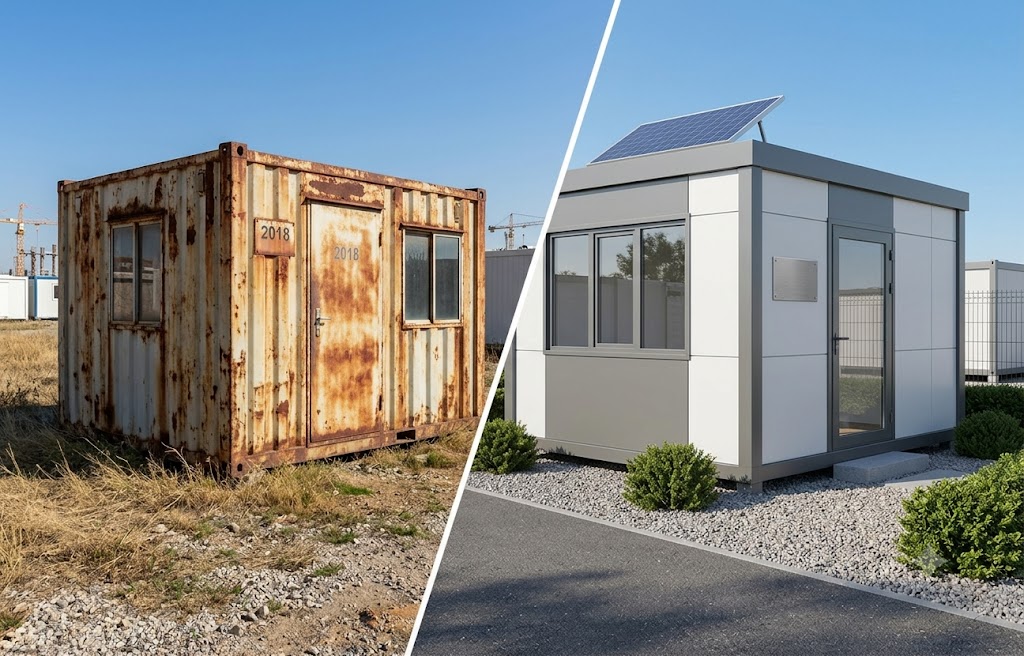
The catch is that you are buying someone else’s history. A cabin that spent three years as a quiet site office is a very different thing from one that spent three years near a chemical store or a wet, salty coastline. Two cabins can look identical from the outside and be completely different underneath.
The hidden cost nobody talks about
This part is where many buyers get caught. A used cabin’s price tag is only part of its cost. Repairs, repainting, replacing worn flooring, fixing AC points, resealing a roof and re-doing electrical work. These add up quietly.
A used cabin that needs a lot of work can end up costing close to a new one, without the warranty or the custom layout. So when you compare prices, compare the finished, ready-to-use cost, not the sticker price.
How to inspect a used cabin before you buy
If you’re leaning toward used, take an hour to check it properly, ideally in person.
- Frame and floor: Look underneath and along the base for rust, soft spots or patched corrosion. A weak frame is the one problem you can’t cheaply fix.
- Roof and ceiling: Water stains, sagging panels or a musty smell usually point to old leaks.
- Walls and insulation: Press on the panels. Bulging, dampness or gaps suggest the insulation has taken damage.
- Electrical and plumbing: Ask to see everything working. Switch the lights on, run the taps, test the sockets and AC.
- Doors and windows: They should open, close and lock without force. Misaligned frames often mean the structure has shifted.
- Moving history: A cabin that has been lifted and relocated many times tends to have loose joints and hidden stress.
- Previous use: Ask what it was used for and where. The answer tells you more than just the cabin.
A simple way to decide
Ask yourself these four questions:
- How long will I keep it? Over five years if it is new. Under two if it is used.
- Will people live or work in it daily? For long daily use, comfort, insulation and safety matter more, which favours new.
- Do I need it right now? If time is tight, a well-inspected used unit may be the practical answer.
- Do I need it to match a specific layout or pass an inspection? If yes, new is usually the safer path.
If your answers are split, there’s a middle option worth considering a refurbished cabin from a reputable supplier. These are used units that have been inspected, repaired and refinished often with a short guarantee. You get part of the savings with far less of the risk.
Quick comparison
| New | Used | |
| Upfront cost | Higher | Lower |
| Lifespan | Longest | Varies, often shorter |
| Customisation | Full | Limited |
| Availability | May take weeks | Often immediate |
| Warranty | Usually included | Rare |
| Repair risk | Low | Higher |
| Best for | Long term & daily use spaces | Short term, budget projects |
The bottom line
Buy new when the cabin is part of your long-term plan and you want it to just work for years. Buy used when the need is temporary, the budget is firm, and you’ve inspected it carefully. And whichever way you go, buy from a supplier who’s happy to answer awkward questions. How a seller handles those questions tells you most of what you need to know.